
The October 2026 Suburban and Student Unrest in Paris: Education, Inequality, and Immigrant Communities
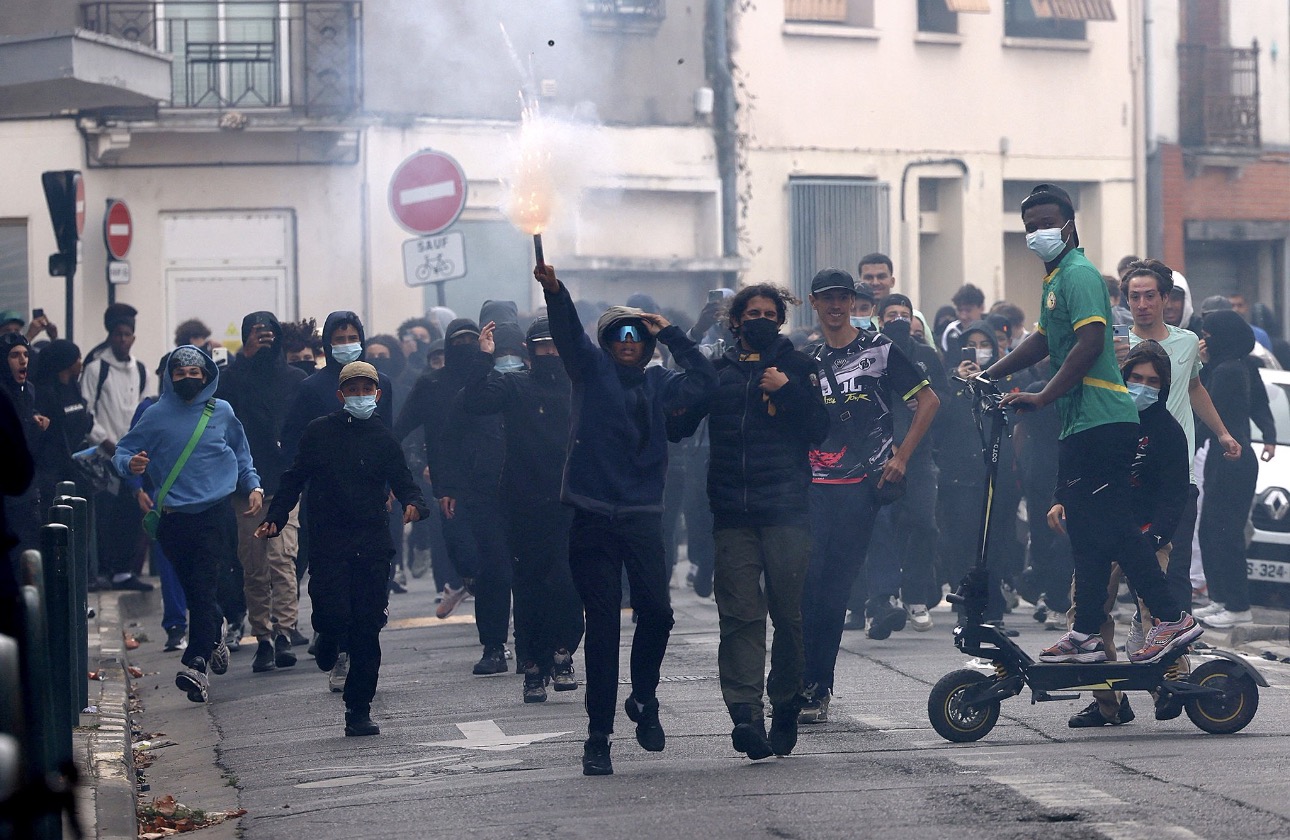
In October 2026, Paris and its surrounding metropolitan areas experienced a widespread wave of student blockades, youth demonstrations, and severe police clashes. Beginning in mid-September in working-class suburban high schools (lycées) before spreading across central Paris and nationwide, the movement shut down hundreds of educational institutions and brought thousands of young protesters into the streets. At the heart of this unrest lies a long-standing issue: severe educational inequality in France’s heavily populated immigrant neighborhoods.
1. The Catalyst: Dilapidated Schools and Staff Shortages
The movement gained momentum in working-class suburbs like Saint-Exupéry in Créteil, Paul-Éluard in Saint-Denis, and Le Corbusier in Aubervilliers. High school students organized blockades using trash bins, metal barriers, and banners to demand basic educational resources. Protesters highlighted severe administrative neglect, including:
- Unfilled Teaching Positions: Chronic teacher shortages leaving thousands of students without subject instruction for months at a time.
- Overcrowded Classrooms: Classes averaging 35 or more students without adequate desks, social workers, or medical staff.
- Failing Infrastructure: Dilapidated school buildings lacking heating, functional plumbing, and climate controls during extreme weather.
2. The Immigrant Connection: Systemic Neglect in the Banlieues
The focal points of the October 2026 demonstrations—particularly the Seine-Saint-Denis and Val-de-Marne departments north and east of Paris—are home to France’s highest concentration of working-class families from North African, Sub-Saharan African, and Caribbean backgrounds. For decades, community leaders and student activists have argued that government disinvestment in these outer suburbs (banlieues) creates a two-tiered public education system.
Students protesting outside suburban high schools explicitly link their poor learning conditions to racial and socio-economic discrimination:
"The education authority is not investing enough in the suburbs. Our classrooms are falling apart while central Paris schools receive full staffing. It is systemic negligence toward working-class and immigrant families."
3. Flag Symbolism and Debates Over National Identity
A striking aspect of the October 2026 rallies and school blockades was the visual symbolism on display. Across many demonstration sites, French national flags were notably absent from the crowds. Instead, protesters prominently displayed flags of Algeria, Morocco, Palestine, and other international symbols.
This dynamic ignited a fierce debate in national political discourse:
- Critics' Perspective: Political commentators and officials argued that the absence of the French tricolor and the proliferation of foreign national and solidarity flags demonstrated a growing detachment from French civic identity and a refusal to assimilate.
- Participants' Viewpoint: Youth activists and community organizers maintained that displaying Palestinian or North African flags served as expressions of cultural pride, anti-imperialist solidarity, and defiance against state institutions they feel have rejected them.
4. Escalation, Police Response, and Youth Tensions
As the protests grew throughout late September and early October 2026, school blockades expanded to central Paris high schools, including François-Truffaut and Claude-Monet, as well as university campuses like Sorbonne University and Paris Cité. However, the most intense confrontations occurred in the working-class suburbs, where clashes erupted between youth groups and riot police firing tear gas and rubber projectiles.
With thousands of arrests and hundreds of injuries reported among both demonstrators and police, local officials instituted curfew measures and assembly bans around closed schools. Government ministers termed the protests "urban violence" and blamed political agitation, while student organizations and civil rights groups condemned excessive police force against minors.
5. The Broader Debate over Republican Equality
The unrest of October 2026 reflects a deeper crisis in French society regarding how the Republic fulfills its promise of equality and integration. While government officials advocate for strict law-enforcement responses, community advocates emphasize that true social integration requires equal investment in suburban infrastructure, public housing, and public schooling.
Until structural inequalities in immigrant-dense working-class suburbs are addressed, Paris will remain vulnerable to recurring cycles of youth activism and civil unrest whenever the social contract breaks down in the banlieues.